Observed phenomena
This page contains subjective descriptions of characteristic OEV phenomena, some of which are clearly captured in the recordings, others not. While OEVs can be extremely rich, complex and varied, here we try to describe them with a reductionist mindset - what are their fundamental properties? Despite this mindset, these observations are still subjective. Different people's OEVs might be different. We don't know how much they vary between people. More research is needed.
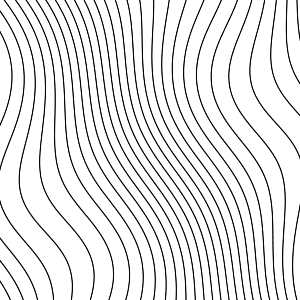
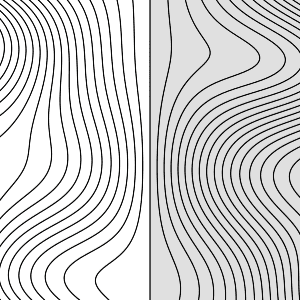
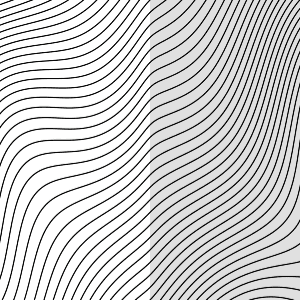
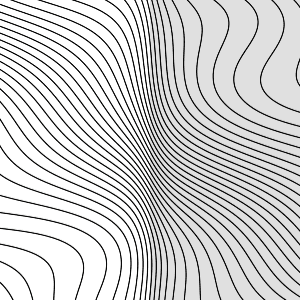
The OEVs seem to fundamentally consist of lines / curves that cover the entire visual field. They are more or less parallel to each other, forming stripe patterns.
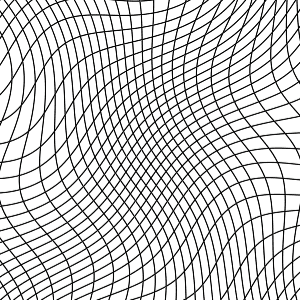
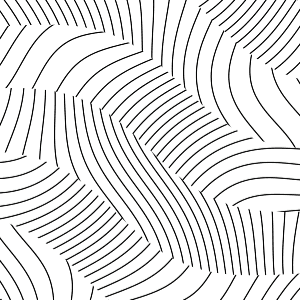
Several sets of stripes at different angles can coexist and overlap, thus forming grids. But there also seems to be some competition between the sets, so there are regions where one set dominates, and other regions where another set dominates.
The stripes change over time in two ways: They move smoothly through space, and they fade in and out.
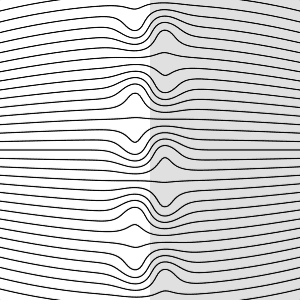
Real edges in the input image seem to serve as some kind of "anchors" or "attractors" for hallucinated stripes. This "anchoring" could mean a few different things in practice:
-
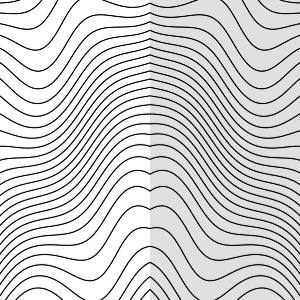
Hallucinated stripes often seem to be locally symmetric around the real edge, as if it was a mirror surface.
-
Hallucinated stripes often want to align with the real edge. Or if not, then the set of stripes seems to want to meet the real edge at a consistent angle, or at least with a periodic pattern to the angles.
-
Hallucinated stripes are often more densely packed near real edges.
When OEVs are quite weak, they can be "reset" by closing one's eyes for a short time, just longer than a blink. Initially, when opening the eyes, the OEVs form some flat tiling pattern across the visual field. Like a wallpaper. It could be a square, triangular or hexagonal grid. But then after looking for some time, the OEVs gradually change into the form constant geometry - radial symmetry around a center point, for example like a cobweb or round tunnel. To relate this observation back to the established science - Bressloff's and Cowan's papers explain why we get the form constant geometry in the early visual cortex, but where in the brain do the flat wallpaper hallucinations happen? Do they happen in another brain region? And then after having had the eyes open for some time, do the patterns in V1 become more dominant?
Transition when focusing on a new spot
All of the form constants have one thing in common: they have rotational symmetry around a center point, for example like a cobweb or round tunnel. But what happens when the hallucinating person shifts his gaze to focus on a new point, some distance away from the old center point? The whole form constant does not immediately shift to the new center point. Instead, while a new center point immediately appears, it's initially quite "weak". Over time it gradually becomes stronger, and the old center point will gradually lose its grip. It takes at least 10 seconds for this transition to complete. So for a while, the pattern has two center points. And if the gaze shifts several times, there could be three or more.
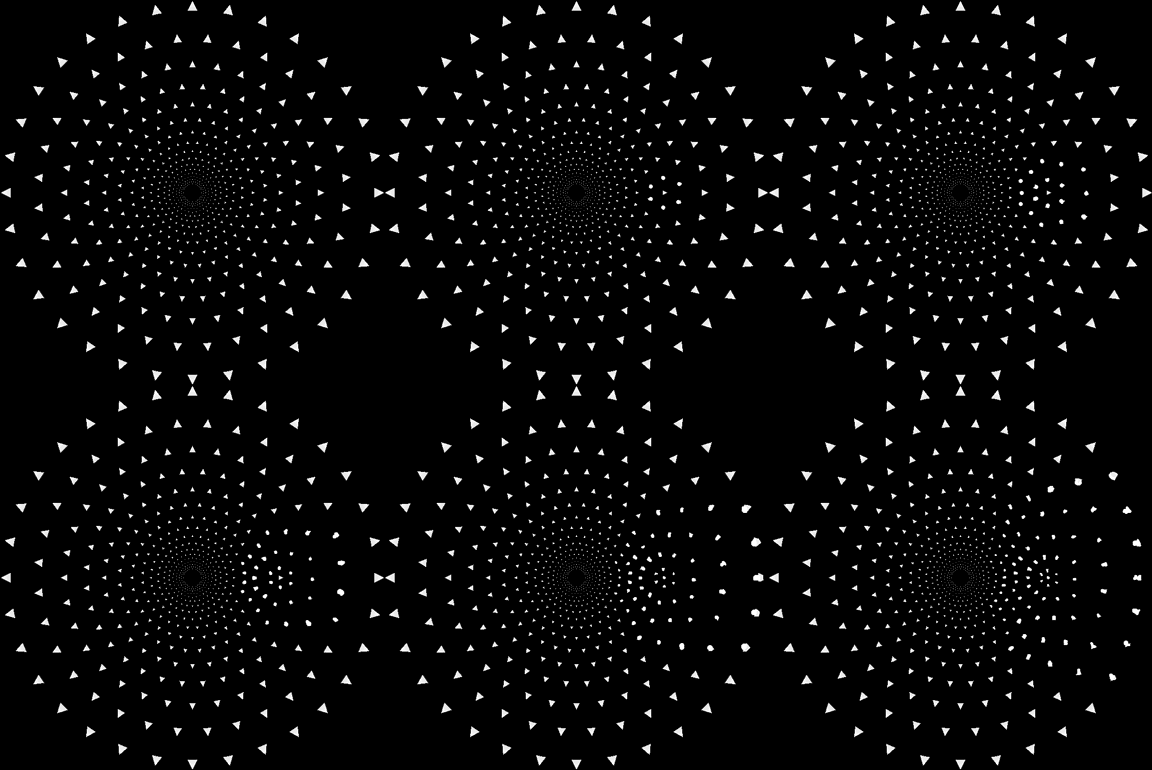
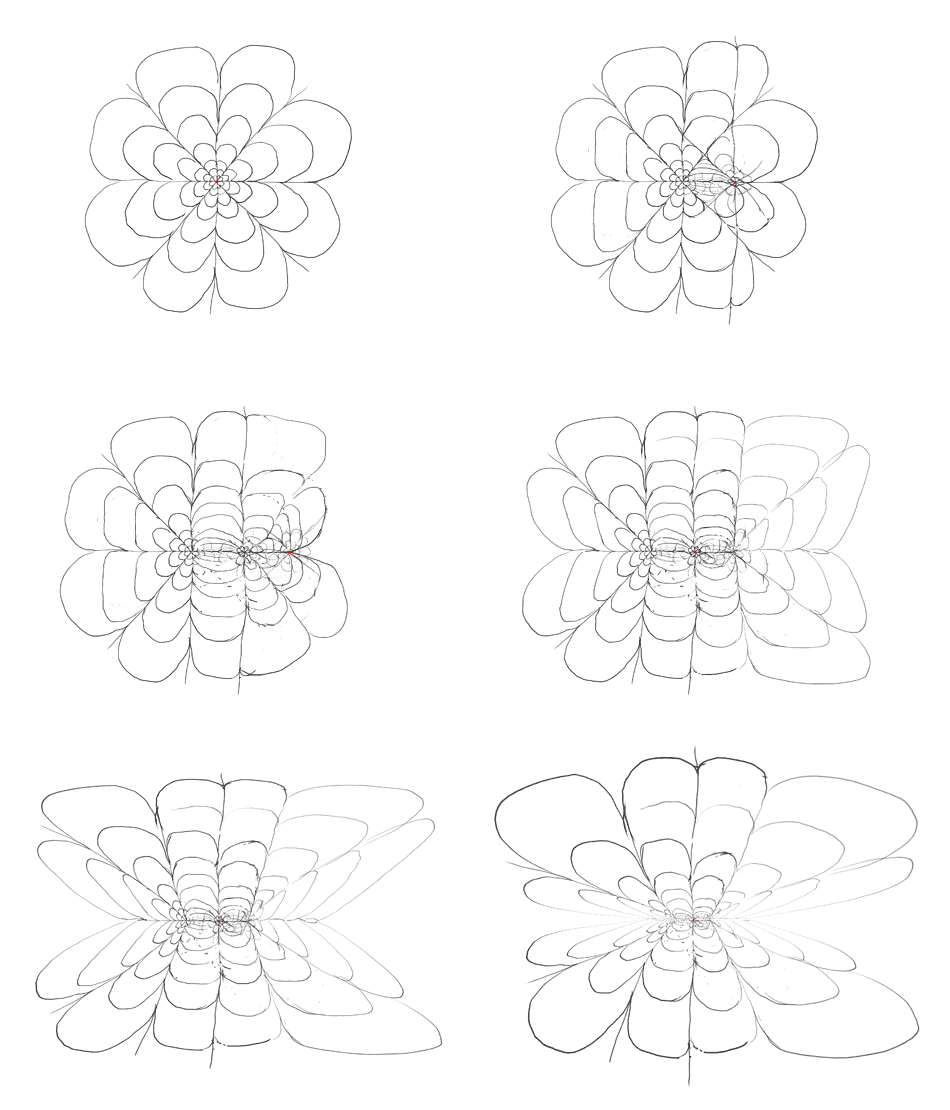
Although the form constants have a clear center point, they are somehow able to support new center points anywhere. In other words, there are "candidate" center points everywhere, just waiting to be activated. Somehow the brain always finds a way to make a geometrically smooth, continuous transition.
Transition when moving the eyes back and forth along a line, then stopping
If shifting the gaze focus multiple times, multiple center points appear. In the limit, they form more of a contiuum. While moving the gaze left and right along a horizontal line, the fundamental geometry of the OEVs tend to look like this: no longer like a round tunnel, but like a room with floor and low ceiling but walls infinitly far away.
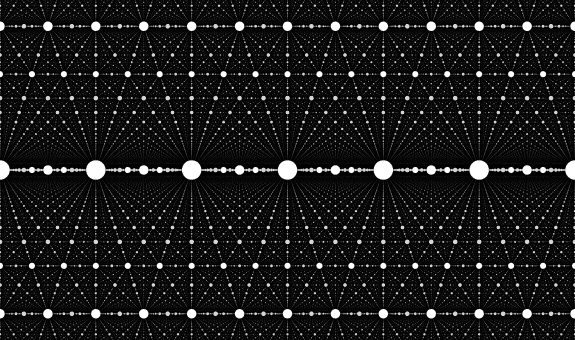
Then, when he stops the eye motion and starts to stare at a fixed spot, the new center point will push and pull on its surroundings, and the lines that pass through it will gradually rotate to become more symmetric, becoming more and more like the classic "tunnel" form constant geometry.
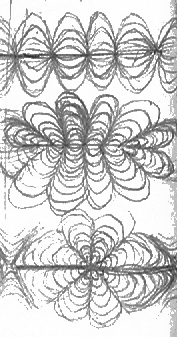
Effect when quickly moving an object across the visual field
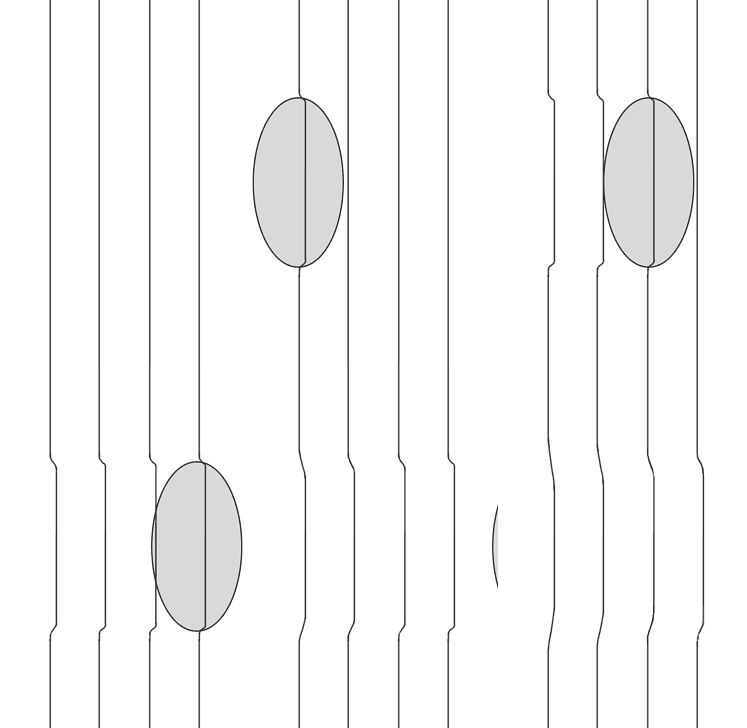
The moving object "offsets" the OEV patterns a short distance in the direction of motion. This offset region remains even after the object has passed, but the sharp corners gradually soften.
Effect when adding a new object into the visual field and leaving it there
Initially, the new object only affects the OEVs right outside its edges. The longer it stays, the farther away its influence spreads.
Mouse cursor tracers
In our custom drawing program, instead of the normal mouse cursor, we use a small white dot with soft edges. Our test subject describes that, while this dot is moving around quickly, it leaves discrete, distinct copies of itself. These copies then flicker on/off at a high frequency, and gradually fade away.